
Trace a Suitland Street
Each record answers a different question, so let every source play its own part. Postal records confirm delivery formatting and nothing more. The assessment record ties a parcel to the owner named on the latest deed. A map shows how that parcel sits beside its neighbors. The deed index supplies the transfer trail behind it. No single record proves who lives in the house today. For an older household, turn to a city directory, a census schedule, or a newspaper record. Do this once the address has been normalized.
- Enter the complete address in the USPS ZIP Code Lookup and preserve the returned city, state, and ZIP as a formatting check.
- Search the address in Maryland SDAT Real Property Data Search for the street location, account, map, block, lot, owner field, deed liber, and folio.
- Open the parcel in PGAtlas, turn on parcel and road layers, and note the subject parcel plus adjoining parcel IDs.
- Use the deed reference in Maryland Land Records to read the latest instrument, then search the prior owner as grantor for an earlier transfer.
- For a past household, compare the address with historical directories and census material rather than treating the current owner field as an occupant list.
Keep both spellings on hand, the original and the normalized one. Direction, suffix, unit, postal city, and ZIP code can each change a result. A parcel account number or a legal description is usually the sturdier link.
Suitland Street Directory Address Search
SDAT is the first official stop for a Suitland by-address search. Pick Prince George's County first. Then search by street address, street name, property account identifier, or map reference. The official guidance says to drop leading directions and street suffixes. It also allows a wildcard when a street name needs truncation. Searching by owner name is not offered. Town, neighborhood, subdivision, and ZIP code searches are not offered either. Any name or ZIP must be converted into a valid address or account number first. Only then can this property search help you.
| SDAT field | Use for a Suitland street | Format note |
|---|---|---|
| County | Sets the Prince George's County record set | County selection is required. |
| Street address | Finds one parcel by physical location | Use the complete street name and follow the portal's direction and suffix guidance. |
| Street name | Broadens a by-street pass | Use official spelling; an asterisk can truncate a name. |
| Property account | Returns a known tax account | Prince George's County guidance uses a two-digit district plus six-digit account. |
| Map reference | Connects a map, block, and lot | A town code can matter for an incorporated town. |
The SDAT property-search guidance notes that the portal is informational. It also goes offline for scheduled maintenance before 7 a.m. Read the owner and mailing fields with care. The owner name reflects the last deed the assessment record shows. The mailing address is simply where tax correspondence goes. Neither field tells you who is physically present at the Suitland street address. Note: Save the account, situs, legal description, map, block, lot, and deed reference. Note: Do this before you move to another portal.
Map Suitland Parcels by Street
PGAtlas and the county GIS add the spatial layer to a Suitland address search. Find the parcel first. Write down the parcel ID or map-block-lot reference. Then switch on parcel boundaries, road centerlines, ZIP, planning, and community layers. Click the subject polygon plus the ones beside it. Every adjoining parcel still needs its own check in SDAT. Map geometry and assessment data update on different cycles. Two parcels sharing a fence line share no household. They share no mailing address or owner by that fact alone.
The Prince George's County GIS program points the public to PGAtlas, open data, M-NCPPC data, and Maryland iMap. The PGAtlas parcel viewer is the assigned source for this map view.
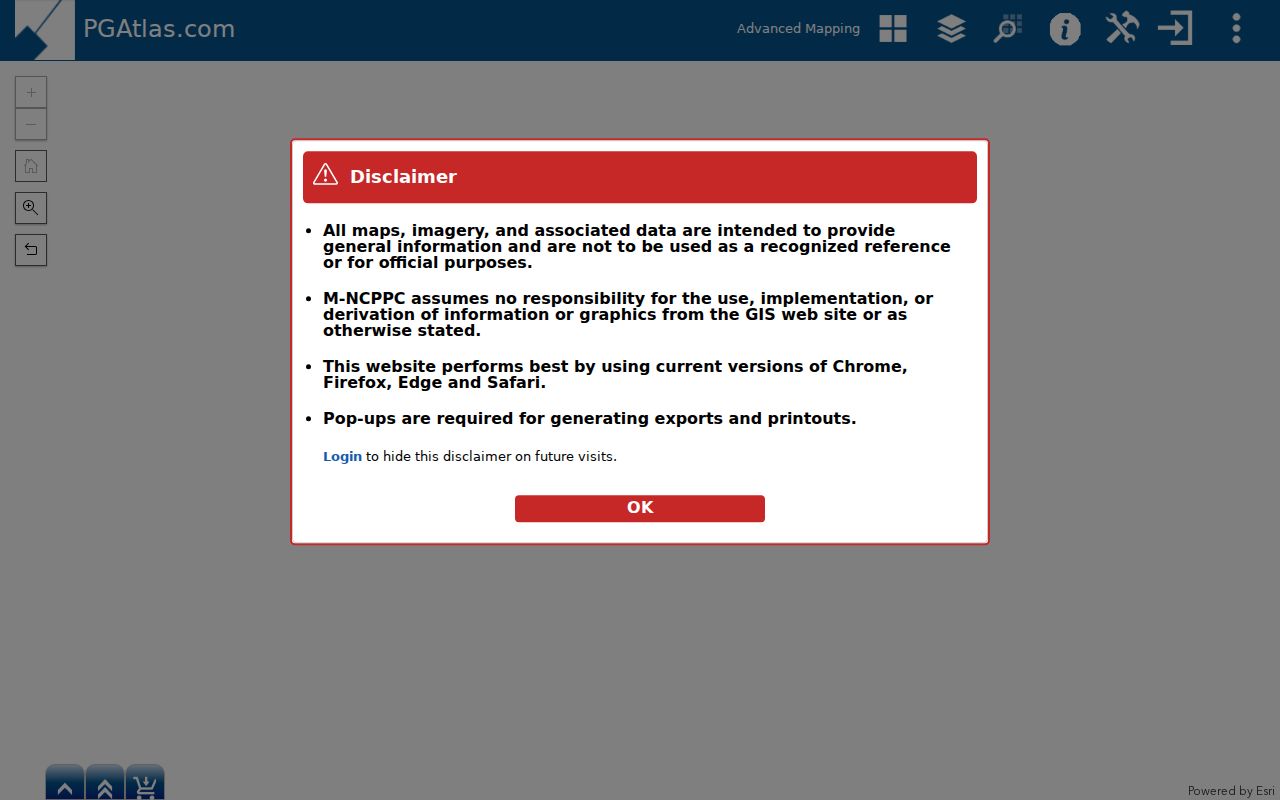
Use the map to capture how parcels relate, then use SDAT and the deed index to interpret those relationships. The map layer is a locator, not a current ownership certificate.
- Parcel
- A tax and map unit tied to one assessment record. It can be a better cross-portal key than an address spelling.
- Situs address
- The physical property location shown by the assessment record. It is distinct from the owner's tax mailing address.
- Plat
- A recorded map that lays out lots, roads, and boundaries. Older deeds may cite a plat instead of a familiar address.
- Criss-cross directory
- A reverse directory arranged by address or street, useful for matching an older street line to a household entry.
Suitland Street Names That Changed
Street history can make a valid Suitland address look missing. Silver Hill Road was once called Old Road, and before that Alexandria Road. It was paved in 1932 and widened in 1965. A modern street-name search may end too quickly. Run those earlier names through deeds, directories, maps, and newspapers. The Census Bureau's Suitland history adds place-name context. It places the federal campus in a landscape reshaped after land was acquired in 1941 and the bureau arrived in 1942. The county publishes no comprehensive house-number conversion or street-renumbering table. Never invent a number conversion. For older land work, move from the current address to tract names, plat citations, adjoining owners, and road descriptions. Then follow the map or legal description recorded with the parcel.
Suitland Street Permits by Address
Permit and code records put dates on a Suitland by-address search. Prince George's County LookSee takes a reference number or an address entered as Street # and Street Name, with no suffix. Reference examples include RES, HOU, and ZONE formats. For most permits filed on or after May 1, 2023, Momentum is the current system. Older records sit in legacy ePermits, where the Activity Search works from a house or building number, street name, ZIP, and CAPTCHA.
The LookSee property search is a free online starting point for a dated permit, license, or case lead. It is not a complete history. Utility, cell-tower, Department of Environment, and well or septic categories follow separate routes. For copies or a broader file, request records from the Department of Permitting, Inspections and Enforcement through its MPIA channel at DPIE.MPIA@co.pg.md.us. PGC311 takes an address and description online, or by 3-1-1 inside the county and 301-883-4748 outside it.
A permit can name an owner or applicant as publicly shown and can date work or an inspection. It does not prove a named applicant lived at the address.
Suitland Address Records
A Suitland address search works best when you know which record set answers which question. The physical parcel comes first. Its account number ties assessment details to a deed reference. It also strengthens any records request you file. From there, the street name becomes a search thread. That thread runs through maps, permits, and historical address sources. Each source answers a different question about the same location. The voter system, by contrast, confirms one individual at a time. It does not serve as a public street roster for the residents directory.
| Address record | What it can show | Suitland access |
|---|---|---|
| SDAT assessment | Owner field, tax mailing address, parcel, deed reference, and property details | Online by address, street, account, or map reference; daily data. |
| PGAtlas parcel map | Parcel polygons, road lines, and planning or ZIP layers | Online map; confirm ownership in SDAT. |
| Maryland Land Records | Grantor, grantee, instrument, date, book, page, and images | Free account access after email-code verification. |
| County permits | Address or reference-number activity and publicly shown parties | LookSee, Momentum, legacy ePermits, or an MPIA request. |
| Historical directories and census | Past household entries and enumeration context | Library and archive collections; verify the exact run and heading. |
Land records for the county also flow through public-access channels in Upper Marlboro. The Circuit Court Land Records Department is the custodian. Staff there do not run title searches or legal research. An online record sometimes needs context. The counter route fills that gap. Documents can come back by mail. They can also wait for pickup. That split between the online index and the custodian's counter matters whenever a Suitland street result comes back incomplete. A street directory entry is a starting point, not the last word.
Note: Jot down the source date, and note whether each result came from assessment, mapping, permit, deed, or historical material.
Suitland Street Postal Labels
Postal labels can change the result set even when the street itself never moves. ZIP 20746 anchors the core Suitland delivery area. Nearby 20747 and 20748 cover District Heights and Temple Hills. They surface in broader local searches. A 20746 mailing address can sit outside the Census-designated place edge. A Suitland CDP address can carry a different postal label. Compare the street, the parcel account, and the map layer. Do this before treating two similar results as the same place.
Run an address through USPS to normalize it. Then keep the postal city and ZIP as one search variant. After that check, stop leaning on the ZIP for property research. Continue with the street location, the SDAT account, the map-block-lot reference, the legal description, and the deed record instead. The county ZIP GIS layer shows approximate delivery geography at a glance. A postal area is not a municipal boundary. It is not proof that a person lives at a specific address either. The distinction matters most along the Suitland CDP edge. A street directory result can straddle two postal labels there.
Suitland Street Deed Chain
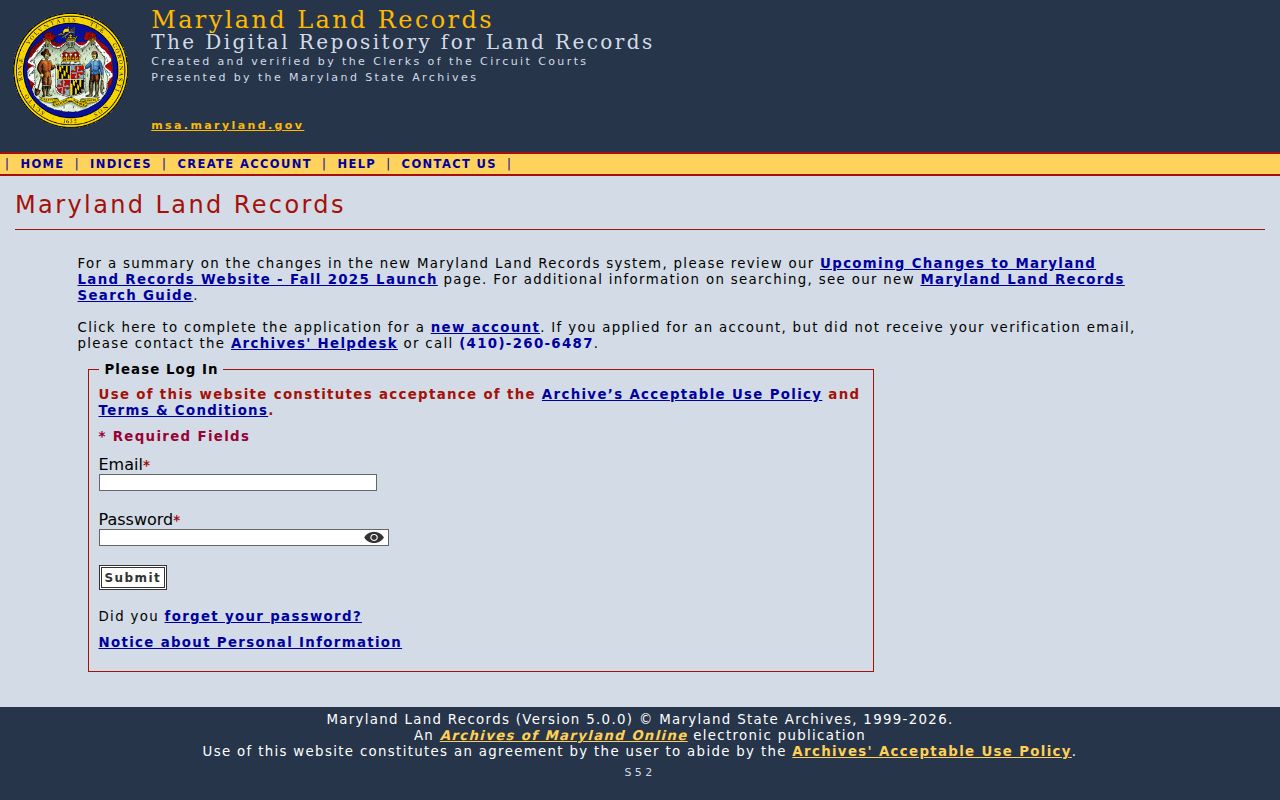
MDLandRec covers the recorded-transfer side of a Suitland address search. The portal searches Prince George's County several ways. You can query by a merged last or corporation name. First or middle name, suffix, party type, and instrument type also work. Book and page, cross-reference, and date-range searches also work. The Fall 2025 system asks for a new account. It also requires an emailed two-factor code and one device at a time. Searching and images are free once access is established. This Maryland Land Records image shows the account and index controls behind a deed chain.
Start with the liber and folio from SDAT. Read the grantor, grantee, legal description, date, and instrument. Then search the earlier owner as a grantor in an earlier range. Keep walking the chain back. The modern Prince George's County electronic index begins in 1950. Older deed work may call for historical or retired Maryland State Archives series. It may also require a courthouse terminal or a certified-copy request. The Maryland State Archives deed order handles certified copies and demands an exact citation. It cannot serve as a name-only search service.
For address lines that predate the modern index, a Suitland directory book can supply a community heading or street variant. Do this before the deed-chain work starts.
Suitland Street Directory Limits
A Suitland by-address search does not produce an official roster of everyone at an address. SDAT shows ownership and assessment, not occupants. USPS verifies delivery information only. A GIS polygon locates land and nothing more. Permit records may name an applicant or owner, yet no enduring household appears there. The Maryland Voter Lookup asks for a first name, last name, date of birth, and a five-digit ZIP. The street number is optional. It returns a person-specific match, districts, a polling place, and related voter service information rather than a browseable street roll.
The Maryland Voter Lookup refreshes daily. Online and MVA submissions can lag by up to three weeks. Confidential voters never appear. County and state voter-data product requests carry electoral-purpose restrictions and a perjury declaration. So they cannot replace open-ended street browsing through the residents directory. Past households belong with dated directories, census records, deeds, and archival sources rather than an unsupported current match.
Lawful use. Suitland address records support personal, lawful research. Do not use public information to stalk, harass, threaten, or harm another person, and respect address-confidentiality protections.